DRC Bans Copper and Cobalt Concentrates to Drive Local Processing
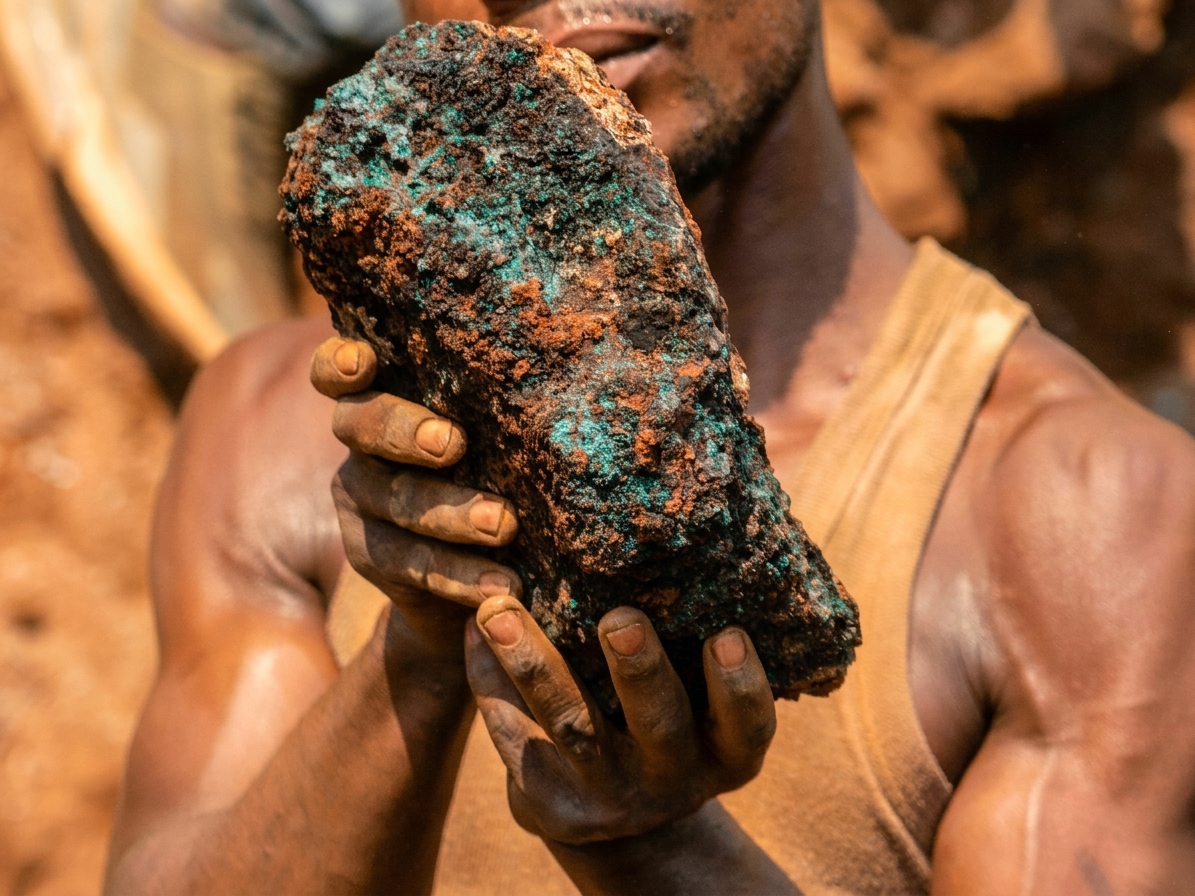

The Democratic Republic of Congo has enacted an immediate ban on copper and cobalt concentrate exports, renewing its push to capture domestic value from its massive mineral wealth.
Signed by Mines Minister Louis Kabamba Watum alongside foreign trade and economy ministers, the joint decree prohibits unrefined mineral concentrates from leaving the country while establishing a new tax regime on mining by-products.
The move by Africa’s top copper producer and the world’s leading cobalt supplier highlights a growing push across mineral-rich nations to move beyond exporting raw commodities.
What Is the DRC Export Ban?
The decree targets semi-processed intermediate materials rather than fully refined metal shipments. It prohibits raw copper and cobalt concentrates, which are crushed, crushed-ore slurries that require further smelting to produce high-grade industrial metals.
Key provisions of the ministerial order include:
- Immediate Prohibition: A complete halt to outgoing international shipments of unbeneficiated copper and cobalt concentrates.
- Taxation on By-Products: A new tax structure covering economically significant mining by-products, implemented with a three-month transition window.
- Discretionary Waivers: One-year temporary export exemptions granted by the mines minister under specific strategic circumstances.
Major multinational operators in the country include China’s CMOC, Glencore, Huayou Cobalt, Zijin Mining, and Ivanhoe Mines.
Why Does the Export Ban Matter?
Resource-rich economies across Africa and South America are increasingly attempting to move past basic raw-material extraction. By blocking raw concentrate shipments, Kinshasa aims to force foreign mining firms to build local processing infrastructure and smelters, creating local industrial jobs and expanding state tax revenues.

The domestic refining landscape currently shows a sharp division in processing readiness:
- Refined Copper Cathodes: Over 90% of Congolese copper already leaves the country as fully processed cathodes. Official data showed 696,725 tonnes of cathodes exported in the first quarter of 2026 alone.
- Copper Concentrates: Unrefined concentrate shipments totaled just 53,926 tonnes over the same three-month period, reflecting a relatively small share of total output.
- Cobalt Hydroxide: Most cobalt is already converted into intermediate hydroxide domestically, though some raw concentrate streams remain reliant on overseas refineries.
Market analysts note that because the vast majority of Congolese copper is already processed locally, the immediate global supply impact remains contained. However, major joint ventures like the Kamoa-Kakula complex—operated by Ivanhoe Mines and Zijin Mining—face operational pressure to process remaining concentrate volumes through on-site or regional smelters in Kolwezi.
What Happens Next?
Infrastructure bottlenecks remain the main challenge to achieving complete mineral sovereignty in Central Africa. Previous concentrate bans enacted in 2013, 2019, and 2023 were repeatedly adjusted through ministerial waivers after local power grids and smelters struggled to absorb the total volume of extracted ore.
Whether this policy succeeds depends on several critical factors:
- Power Grid Capacity: Industrial smelters require large, continuous electrical supply that local power grids currently struggle to deliver.
- Waiver Management: Broad issuance of strategic one-year exemptions could reduce enforcement pressure and delay local refining investments.
- Regional Logistics: Changes in processing volumes will alter transport corridors running through neighboring trade hubs in Zambia, Tanzania, and South Africa.
If Kinshasa maintains strict enforcement and stabilizes local power supply, the mandate could accelerate domestic refining investments across the regional copper belt.


Comments0
Sign in to join the conversation
Share your perspectives and engage with other readers.